Showing posts with label Tex Thompson. Show all posts

Tuesday, June 9, 2020

Action Comics #22 - pt. 2

Clip Carson is on a steamship heading from Algiers to South America (two issues earlier, Clip was a guard on an ivory caravan in Africa, so this makes sense). When he sees a man clubbed and shoved overboard, Clip selflessly dives into the water instead of waiting for the ship's crew to point some searchlights into the water first. Searching in the dark would have been at a large penalty, perhaps dropping Clip's chance of finding the sinking man to 1 in 8.

The man, Clip later finds out, was marked for death by having bought an ivory statue crudely depicting an elephant. A cult allegedly worships this as an idol and anyone who touches it is marked for death. Clip is told this marks him too, even though he only reaches for the idol, he never actually touches it. The idol story would make more sense if it was bought in India instead of Africa, then this would be a statuette of Ganesha. A cultist makes an attempt on Clip's life, throwing a dagger through a porthole. Not only would this be a tricky shot, but Clip remarkably makes no effort to go after the dagger-thrower, despite the fact the would-be assassin must have been dangling precariously over the side of the ship.

The first suspect is an anthropologist onboard. The anthropologist correctly points out to Clip that the owner's story doesn't hold up; that there is no elephant god in Africa, but Clip doesn't believe him because the man gets so huffy with him. Remember, when running Hideouts & Hoodlums, to be in-character when giving out information; players need to know that info is coming from a character who may or may not be correct, or honest, and not straight from the Editor.

Clip goes to the radio room and asks the attendant to "burn up the ether with this message." It's a curious phrase and one I was surprised to see still gets used today! The earliest use of it I can find is a 1927 book called The Story of Radio. Apparently, there was once a serious concern that the atmosphere might be able to hold only so many radio waves at a time, and the proliferation of radio was actually a danger -- that it would literally set the ether on fire. Even though Einstein's theory of special relativity made the theory of ether obsolete in 1905, the idea stuck around, particularly in its association with radio waves.

The person Clip sent the radio message to is one of his supporting cast we've never met before, a newspaper editor.

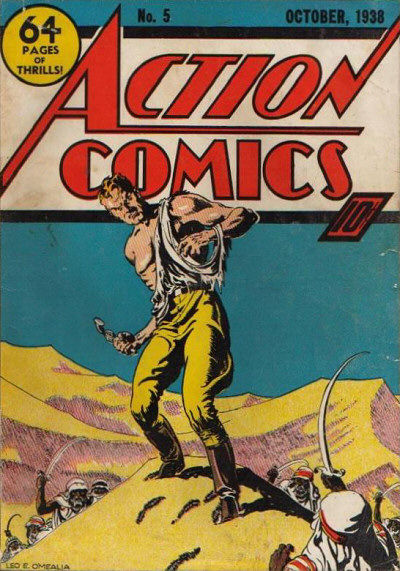
"Tex" Thomson's adventure starts with a lengthy prologue in the Indian Ocean. An explorer is warned not to go to an unnamed island because of the demons there. On the island, he meets an old man who claims to have stolen his soul and begins to slowly transform into the explorer, Cary James. The demon's transformation takes two days to accomplish, at the end of which time Cary will be dead. During that time, Cary remembers he had been given a locket to protect him from the demons. Incredibly, for no reason other than to further the plot, Cary puts the locket in a bottle with a note for a friend instead of using the locket.

Later, in NYC, we learn that Cary's friend is also friends with Tex. The demon, impersonating Cary, is there in NYC too. The demon is looking for the locket, because the locket and the letter both made it to Dr. Drummond in NYC, who just happens to be the friend Tex is staying with. The letter explains that touching the locket to the demon's forehead will destroy it. Tex isn't even the one who does it; it's Dr. Drummond, the true hero of this story.

Although called a demon in this story, this monster sounds more like a doppelganger. Perhaps this is a more powerful version that we can call a demon doppelganger. The touch of the locket makes it revert momentarily to its previous form before turning to ash.

Zatara is at the "El Storko Club," dining alone. This is clearly a stand-in for the Stork Club, the famous Manhattan nightclub, one of the most prestigious in the world at that time. Zatara spies The Tigress before she spies him, (he has surprise) so he turns himself invisible to watch her. The Tigress slips something into a banker's drink. Interestingly, Zatara doesn't cast something like Purify Food & Drink or Neutralize Poison, but a spell that "glues" the man's glass to the table. I have no spell like that in H&H. It seems to be a spell of such limited utility that I hesitate to make one, unless it can make objects much larger than a glass immobile. In that case, Immobilize Object might be a 1st or even 2nd level spell, depending on the weight limit affected and its duration.

As the banker and Zatara leave together, Zatara spots a safe about to land on the man beside him. Zatara makes the safe blow away -- probably with Telekinesis rather than Gust of Wind. Safes are heavy though, but Zatara has a lot of brevet ranks, so maybe he's high enough in level to move 800 lbs.? That would make him...oh. 40th level. There either needs to be a Greater Telekinesis power, or Telekinesis -- already a 5th level power -- needs a lot of tweaking.

Zatara has no spell for analyzing poison; he takes the drink from the Stork Club to a chemist for analysis (luckily it's not contact poison because it's surely been sloshing around and spilling on his hand by now). Zatara casts a spell that is very much like Word of Recall, but it doesn't have to be Zatara's home, it can take him to anyone else's home who travels with him. Zatara casts a Wall of Glass spell around the man's home. I'll make that a 4th-level spell; it's still pretty effective, since the glass is about 5' thick. Then he casts Passwall to go through the Wall without just flying over it. After all these powerful spells, it's remarkable to see Zatara cast a 1st-level Disguise spell to make himself look like the banker. Then he casts the 8th-level Polymorph Any Object spell to turn an ordinary paper check into a living snake.

Zatara turns down a $100,000 reward for saving the banker. With as many brevet ranks as he has, Zatara's player has apparently given up on ever leveling his was past them.

The man who hired the Tigress to kill the banker is a bad guy called the Mask. Like the Tigress, he has no powers; he just pays a plastic surgeon to make him look like people. Zatara must be famous enough that the surgeon knows exactly what he looks like (or the Mask had a lot of photos taken between panels). Having failed to kill the banker, the Mask impersonates Zatara and asks for that reward money -- which is a pretty good Plan B, I have to say.

If using Telekinesis on a safe was too much, Zatara next uses it on a car that must weigh a ton. Telekinesis definitely needs improving in the rules. Zatara uses Polymorph Other on the Mask to make his face ugly (even taking away one of his eyes to be extra mean). Zatara even goes after the plastic surgeon, putting a curse on him so he can never perform surgery again. Again he lets the Tigress go free, since he has the hots for her.

So, to summarize, we know Zatara has somewhere between 18 and 100 levels in Magic-User.

(Read at readcomiconline.to)


Monday, March 4, 2019

Action Comics #21 - pt. 2

'Chuck' Dawson's adventure starts with an interesting variation on the "message in a bottle" -- as someone chucks a flask containing a written warning into the canyon Chuck is traveling through. Like any good plot hook, the warning only encourages him to investigate and he uncovers kidnappers. Unfortunately, the story includes the racist stereotype that "half-breeds" are evil.

"Clip" Carson takes place in Algiers, the capital city of Algeria. Rescuing a man from attackers serves as both good deed and plot hook for Clip, as he winds up working as a guard on a caravan for the man he rescued. In a plot twist, the man told Clip he was delivering food to a sheikh, but is secretly an arms dealer; further, he plans to have Clip killed after the delivery, so he can't tell anyone he delivered arms to the sheikh. The sheikh's people are called "touregs" by the narrator, but what was meant was Touareg or Tuareg -- a Berber ethnicity indigenous to the Sahara region.

Because disguise is such an easy skill in comic books, staining your skin to look dark with a cigarette and water should be a basic skill check (as improbable as it may seem...).

This story is the first time I've seen the term "tractor car;" I suspect what the author means is a four-wheel drive vehicle, which were around but uncommon circa 1940 (in the late '30s they were considered luxury cars and produced by BMW and Mercedes-Benz). Clip tells us his tractor car can go 40 MPH over sand.

The "Clip" Carson art is much improved this issue by Sheldon Moldoff.

Tex Thompson is back home from his Africa adventures, home probably being Texas, even though the narrator never tells us so. This one's a murder mystery, and it's intriguing at first that the retired colonel is murdered right in front of Tex. Unfortunately, the clues are easy (why send a wooden figure to the victim made out of a special wood only you own?) and the explanation for where the knife came from is far from convincing. Also, there's the whole uncomfortably racist, nonhuman look of Gargantuan.

The Three Aces adventure starts in Alaska at the building of a Koyokuk Dam. I don't believe there is such a facility, though the Koyokuk River is real. None of the action takes place there, but it establishes that one job for aviators in their downtime is aerial photography. The Three Aces leave and fly over an unnamed mountain range, but in Alaska there are only three to choose from, the Alaskan Range, the Aleutian Range, and the Brooks Range.

Uncharacteristic of most fighter-types in comics, when Gunner, Fog, and Whistler arrive in town and see a fight in progress, but don't know the story behind it, they use nonviolent attacks like tripping and disarming to end the fight without hurting anyone.

The Three Aces help an old prospector who tells of his friend's find in the Mummy Range. It sounds made up, but there is such a place as Mummy Range -- only it's in Colorado, not Alaska. There is a Bald Peak in Alaska, so the old man's story is soon back on track.

Fred Guardineer's Zatara teams up with "Lord Ralway" in this month's story, but the dialogue strongly implies that Ralway is actually Lord Baskerville, of Sherlock Holmes fame. Sherlock Holmes is name checked as a real person, making this the first time he is added to DC canon.

Zatara casts a Levitate/Telekinesis spell powerful enough to lift a car into the air. He projects his astral form from his jail cell after being detained in a murder investigation. His astral form is invisible, but he can speak and be heard. His astral form can also fly and move through walls. Bizarrely, Zatara's astral form is able to carry Tong on its back, though perhaps he is simply levitating Tong directly behind him.

Zatara turns the bars of his cell into people, which seems ridiculously overpowered for a spell, even if it only lasts 1 turn. He turns a man into a salt cellar (what we would call a shaker today). Another man he ages by about 20 years. He turns the murdered body into a statuette so he's easy to carry. Tong -- who is way too understandable about this -- gets turned into a blood hound so he can sniff out Ralway's trail.

With another spell he causes all gun barrels to twist in a specific area. With another spell he gazes into a room he hasn't entered yet (Wizard Eye?). With another spell he teleports two people to him. With yet another spell he causes three large buckets of molten lead to appear in the room. He casts Cure Light Wounds on Tong, but we've seen him do that before. Lastly, he casts a spell something like Bigby's Grasping Hand to catch the two fleeing bad guys.

In a real surprise, Zatara says his magic has little effect on birds, so he is worried about three trained condors. There's no way to make the game mechanics do this without setting arbitrary weaknesses to spells, but that's not entirely unreasonable, as I've already added them to some of the race options.

Lastly, I would not put much stock in condors as a palpable threat, assigning them maybe 1/2 HD.

(Read at fullcomic.pro)


Friday, August 31, 2018

Action Comics #20 - pt. 2

In Tex Thompson, racist caricature Gargantua T. Potts misses a morale save when he sees five zombies and faints. Text discovers that swallowing salt not only protects them from becoming zombies, but can reverse the zombification process (though this may be only true of "fresh" zombies; it is unclear if being a zombie longer makes it permanent).

After freeing the zombies, Tex forgoes fighting the whole tribe of natives by rushing straight to their chief and challenging him in single combat. Now, normally, the cliche is that this works and the Hero gets to win the scenario with just one fight -- but this time it doesn't work and Tex gets knocked out and put in a deathtrap (tied on a spit over a roaring fire) -- so maybe he tried to save vs. plot to make that happen and failed?

Likewise, the story makes use of the cliche of the chase over the rickety bridge spanning a deep chasm, and this time the natives do pursue across, like in the cliches, even when they see Tex cutting the ropes on the other side. Maybe they missed their saves vs. plot too.

The Three Aces are in the Koyukuk "Valley" in Alaska, which is a real place. Golden Age writers always seem more comfortable using real places if it's in Alaska. Gunner uses semaphore to communicate with the other two aces in their plane -- a rare instance of a language being used that not every Hero necessarily knows.

Gunner rescues a stranded father and daughter. The father is hurt, but Gunner gives him hot broth to "bring a stir of life to him." It is not the first time I have considered allowing healing after eating -- though I'm not there yet.

We learn that Gunner Bill is an orphan, possibly being the closest we ever get to an origin story for one of the Three Aces.

Gunner, the father, and daughter Tony are trapped in a blizzard for an entire week. Only after the week ends do they finally meet a wandering encounter, a pack of at least seven wolves. Very unusual for an adventure strip, the thugs who attacked Tony and her dad and left them stranded are caught and arrested behind the scenes, without the Heroes involved at all (which is what happens when you don't want to continue the scenario next time).

The Zatara story, curiously, takes place earlier in the summer of 1939. The "mist death" strikes in Africa, Asia, and Europe, killing hundreds every time the mist appears. It is not a choking hazard, but burns the skin like acid. The Prime Minister of England (if you squint really hard, it even looks like Neville Chamberlain a little) recruits Zatara to investigate.

Zatara is visited by a moon woman. Moon women are like full-sized Tinkerbells. This one is crazy; she thinks moon people came to Earth thousands of years ago and wiped out most human life. Zatara casts a "Fly" spell so he can accompany her from England to India in a matter of hours. The Fly spell does not allow transportation that fast, so they are more likely teleporting slowly -- unless some more powerful version of the Fly spell exists.

Instead of attacking from the Moon, the moon men are attacking from underwater caves off the coast of India. Unlike moon women, moon men look like 5' tall goblins, with green skin, big, orange, saucer eyes, and lower jaw tusks. It is unclear if the moon men have horns, if they just wear horns attached to the chainmail coifs they all appear to be wearing.

Zatara casts some kind of a spell that turns rays from the moon man's raygun into firecrackers. It seems overly-powerful that Zatara uses a spell powerful enough to transform energy into matter (that's a high-level polymorph spell -- at least 6th level!) to overcome a lone sentry, so perhaps it is a simpler weapon that makes weapons misfire (I could see that as a 4th level spell). Then -- because this is Zatara and he always burns his most powerful spells right away -- he also casts Wall of Stone (another 4th level spell) in front of the moon man as he's running away.  When he meets the moon men's dictator, he uses Telekinesis -- a third 4th level spell! -- to tip his throne over on him.

Zatara is attacked by nitons -- winged snakes (with sail-shaped wings) that have magic resistance and are immune to mind-affecting spells. Very unusual for Zatara, he has to flee from the nitons and uses Wizard Lock on their three remaining cages (maybe Wizard Lock should affect more than one portal?) so more nitons cannot be released. And then he casts Hold Person on the nitons' keeper (though the spell makes it appear that chains have wrapped around him).

The next two spells are confusing. To save Nala, the moon woman, when he finds she's been captured (the moon men view her as a different race, by the way), he casts a spell that makes a glass wall (Wall of Glass -- 2nd level spell?) appear around her. That keeps the moon men from harming her, but it does not explain how it gets her away from them by the next panel. Then Zatara casts a spell that teleports every net (nets are used for catching nitons) located in the moon men's sunken city into one big pile. This has got to be some advanced version of Teleport called Collect, and I would put it at 8th level (it can collect every example of one type of item found within a certain radius, so if you cast it to collect doors, every door in the hideout within a 1,000' radius, or something like that, would appear in a pile by you). Then he tosses a Fireball on the pile of nets, because the nets go up in a cloud of smoke. 

Next, Zatara casts Polymorph Any Object three times to turn the cages of nitons into pearls. He uses Polymorph Self to appear to be a moon man. He uses Charm Person -- a very rare 1st level spell! -- to make one of the moon men scientists his best friend and tell him their whole master plan.

Moon women can turn invisible. Nala claims moon women lived on Earth millions of years ago before migrating to the Moon. Although, bear in mind, she's a fruitcake. Zatara indulges her because he likes how she looks in a bikini.

Earlier, Zatara claimed the moon men were a thousand years more advanced than Earth men. Little bears that out, though the moon men do have a monorail, and they can turn radium into gaseous form (that accounts for the death mist). Zatara plans to kill all the moon men with a combination of the radium gas and the nitons -- though, to be fair, the moon men also plan to end all life on Earth, so it's kind of a kill or be-killed situation.

Zatara either owns a Cloak of Invisibility, or casts an Invisibility spell in the form of a cloak.

Zarara must have some spell cast on himself that protects him from radiation, as he withstands a lot of exposure to it while moving through the mist-filled city, more so than can be explained by his amount of hit points.

In a rare instance of Zatara claiming a trophy item, he takes a moon ray gun, which can wreck at short range.

Moon men and moon women were both statted in Supplement I: National.

(Read at fullcomic.pro.)


Thursday, January 26, 2017

Action Comics #18

Before Superman even shows up in this month's story, we're treated to the a sleeping gas attack and the notion that holding a handkerchief over your nose and mouth is going to spare you from gas potent enough to fill an entire car and knock out its occupant/s. I would be inclined to give a bonus to save for taking a precaution like that -- +1 or +2 at most, but that still leaves a lot of room for a plan to go wrong.

From the blackmailed politician we learn that $10,000 is enough to corrupt a politician.

We see Superman's X-ray vision (the 3rd level power) in use for the first time.

Superman gets shot at with a bow and arrow for a change of pace this issue, and snatches the arrow out of mid-air. I don't have a power for that, because the important thing is that the arrow missed, and him catching it is really just flavor text.

Superman then decides to show off with the bow and arrow. Now, maybe Superman practiced with a bow and arrow in his youth, but it's pretty clear that he pulls off a spectacular hit on a small target. This was the impetus for the Bulls-Eye (2nd-level) power.

It's still unclear if Superman can fly at this point. He trails a car in the sky; one would presume that if he was jumping and landing behind the car, that someone might notice.

He also demonstrates Leap (at least Leap I), Nigh-Invulnerable Skin, Raise Elephant (because he raises trucks, heavier than cars), and wrecks a printing press (as if a generator).

A rival paper to the Daily Star is the Morning Herald. There actually was a Morning Cleveland Herald until 1868, though it's unclear if Jerry Siegel would have ever seen it.

Chuck Dawson, in his story, gives us a valuable lesson for players -- when a posse thinks you've killed the sheriff and is closing in on you, don't be afraid to run!

Clip Carson's story is an interesting lesson in hideout scale. Here, he finds himself in a cavernous hideout so large that, when reinforcements arrive, they show up riding elephants!

Tex Thompson's arch-nemesis, The Gorrah, returns, this time in Turkey, where Tex and friends are working for the Turkish Prime Minister (it was Refik Saydam in real life). The Gorrah has cyborg-like creatures working for him this time. It's difficult to imagine how to stat them; they look like they're half-robot, half-skeleton, probably with human brains controlling them, but lose all scariness because they're all wearing fezzes. The Gorrah tries hypnotism on Tex. It fails, but The Gorrah can't tell and Tex uses this to trick him. Hero magic-users will have the same problem when their victims make their saves. The Gorrah takes a poison pill, seemingly killing himself, at story's end.

The Three Aces may not be the bravest Heroes to ever headline a story in an anthology title. When threatened by hijackers, their solution is to stall for time until help arrives! Players may be interested in similar tactics, especially players who favor keeping their Heroes alive over having them do anything heroic. We learn some backstory about the Three Aces, that they had flown in the Spanish Civil War together back in 1937.

Zatara becomes the first Hero to visit Atlantis. He gains possession of a map to Atlantis when a former rival, Queen Setap of Ophir, shows up and wants his help with following it. We learn that the map starts them off in the Sargasso Sea (northern Atlantic) and that Atlantis is somewhere in the Atlantic, which does match up with where Marvel Comics would later put Atlantis in their comics (but is distinctly different from the Golden Age Sub-Mariner's Antarctic kingdom).

En route, Barnacle Will and some pirates attempt a mutiny, thinking the map leads to gold. Where it actually leads is a little confusing...from the page I've seen, it looks like Atlantis is at least partially un-sunken still, or perhaps they just land on a nearby island as a staging area. Whatever it is, the surface island is protected by "under-earth creatures" that look like goblins with tentacle arms. I'm unsure how to stat these creatures...but their use of nets as weapons reminds me of ratmen (a new mobster type from 2nd edition).

In the story, Zatara appears to use a spell called Create Bridge, but is perhaps just flavor text for the first level 2nd edition spell Poof!, which allows him to cross over short distances of water. He casts a spell on the under-earth creatures that ties their tentacles into knots...but I'm not clear what purpose that serves other than a distraction. If they really can't use their tentacles then, maybe this counts as Mass Paralysis (a 1st edition power, though, not a spell).

Lastly, Atlantis is guarded by Roor, a giant octopus. Here we meet our first mobster with magic resistance. Apparently, any mobster can have magic resistance, and this is very high resistance -- either 80% or more, or perhaps total immunity to damaging spells. The only spell that works is Phantasmal Image, tricking Roor into thinking sponges are people to eat.

(Superman story read in Action Comics Archives v. 1, select other pages were read at the Babbling About DC Comics blog, and the rest was read in summary at DC Wikia and Mike's Amazing World)

Wednesday, December 7, 2016

Action Comics #17

I have a surprising lack of information about this issue.

In Superman's adventure, Superman's "commanding voice" could be some use of a power, or it could mean that he gets a bonus to encounter reaction rolls because of his high Charisma score. Since Charisma always does this, I don't see the need to duplicate it with a power.

Superman demonstrates Resist Fire and Push Ocean Liner as powers in this story. We also see he can leap while using the Raise Car power at the same time. At another point, though, he listens in to a phone conversation via an extension phone because, presumedly, he didn't prepare the Super-Senses power for that day. At another point the narrator claims that Superman is using "super-hearing", but he's only eavesdropping from outside a window, and I'd allow a skill check for that.

Superman, still dressed as Clark Kent, gets mad and lifts a man over his head in this story. More evidence that I was wrong to require superheroes to be in costume to use their powers.

Ultra-Humanite demands $5 million in extortion money in this story, possibly the highest monetary sum featured in a comic book to date. Ultra -- as he's referred to in this story -- uses an acid gun, a transparent metal wall, and an image projector against Superman.

In Pep Morgan's story, one of the reasons Pep is able to defeat Pedro is because Pedro's gun jams. There is now a chance of this happening in 2nd edition Hideouts & Hoodlums.

In Clip Carson's adventure, he's on safari in India when he kills a tiger, rescues a plot hook character (one of those "old friends" you've never seen before, but ties into a character's backstory), and investigates a cult. Next installment we're likely to see cultists actually show up -- just like they are as a mobster type in 2nd edition H&H.

Tex Thompson is a high-Charisma Hero too, as evidenced by his growing number of supporting cast members. In addition to regular SCMs Bob Daley and Gargantua T. Potts, Tex picks up a temporary SCM, Ali-Baba, while adventuring in Turkey. We also see the return of The Gorrah, which appears to be a bogeyman (a new mobster that will be in the Mobster Manual when it's done). The Gorrah demonstrates his hypnosis ability. Tex displays a knack for disguises, but The Gorrah seems to easily see through it (even though it's better than most comic book disguises). The Gorrah's hideout is well-trapped: an electric eye at the entrance alerts The Gorrah in his main chamber, then The Gorrah has television cameras set up to show him the hallways, and he can raise inverted portcullises from the floor to trap intruders.

In Zatara's story, we learn that Zatara takes a yearly cruise to Europe. En route, he picks up two temporary SCMs, "old friends" John and Beth Jordan on the cruise ship. Also on board is someone out to get one of them, as they are "attacked" by a thrown net. For some reason, Zatara is worried enough about this that he burns a high-level spell to polymorph the net into gold coins (or maybe he thought the other passengers looked poor...or was looking to destabilize the gold market in Europe...).

Somehow, the three of them wind up in the Lost City of Ophir, where the ancient queen Setap is kept alive by Potions of Immortality (they keep her alive, but over time the leave her old and frail). Somehow, Beth has "purer" Ophir blood than all the people of Ophir around her, so she wants Beth's fresh blood for more potions. Then, as if we didn't already guess from this that Setap is evil, she shows them the poison gas she plans to use to kill every non-Ophir citizen in the world. She also gives away her connection to Atlantis, which will become relevant in the next story.

When Zatara tries to intervene, he is temporarily stopped when Setap throws a blinding fluid into Zatara's eyes. This is, coincidentally, very effective on Zatara because he needs to make eye contact for his spells. The deathtrap she placed him in is being slowly lowered by rope into a roaring firepit, but the heat causes him to sweat and the sweat clears his eyes of the blinding fluid in time (save vs. plot successful?).

Zatara uses Phantasmal Image to steal into the city past the guards (they are distracted), and he casts Dispel Magic to reverse the magical blood transfusion that turns Setap young and Beth old. As flavor text, Zatara summons the Flame of Life from the Temple of Atlantis and it reverts them to their true ages.

Setap and Ophir are clearly stolen from Tarzan's Queen La of the Lost City of Opar.

(Superman story read in Superman: Action Comics Archives v. 1, select pages also read at the Babbling about DC Comics blog, and then summaries of the rest read at DC Wikia and Mike's Amazing World of Comics.)

Thursday, October 20, 2016

Action Comics #16

Let's start with Superman.

Catching a falling man isn't really a big deal for Superman, and probably only needs a successful "attack" roll to scoop the man up.

The early Superman doesn't seem to care all that much if anyone figures out his secret identity. Not only does he wear no mask and conceals no fingerprints, but the windows on his apartment have sheer curtains. You'd think he'd at least use shades for more privacy!

This is the first story to call Superman's port of call "Metropolis", beginning the trend of fictional cities in the superhero genre.

The police commissioner in this story is a corrupt politician, despite the fact that most police are statted as fighters.

$5,000 was apparently a good night's haul for a casino-club.

The gamblers in this story don't seem to have any special abilities worth statting differently than slick hoodlums, other than to give them a better chance of rigging games.

Superman turns down the chance to collect XP for keeping the money in exchange for the good deed award for giving it all away to poor people.

Racketeers seem to have even less special abilities than gamblers.

Superman wrecks gambling establishments, both with a hammer and his bare hands. Since he's not wrecking the buildings themselves, I'd probably treat this as a wrecking doors roll (and at Superman's current level, he probably doesn't even need to roll for that anymore).

Superman picked up a fixed deck of cards to fool the gamblers, and then keeps it as a trophy.

Pep Morgan's adventure has an unusual angle -- Hero playing bodyguard. Can an Editor pull off a session where the Hero has to spend a week living with another character, waiting to see if any harm comes to him or her (her, in this case)? Only if the Editor creates an engaging character, and the player really likes to roleplay.  Otherwise, the scenario will quickly fast forward to the first whiff of danger. This is part 2 of a 4-part story arc where Pep is employed by a Mr. Smith, who keeps handing Pep plot hooks.

Pep, despite being just a college student, is already a pipe smoker and goes to bed early enough that he's asleep at 11:30 pm when mobsters try to abduct Mr. Smith's daughter, Mary. Something wakes Pep up in time, though (save vs. plot?) so he can come pummel the kidnappers with his fists until they surrender. One of the kidnappers falls over from being pummeled, which isn't supported by the game mechanics, although an Editor could rightly say the circumstances warranted it since the man was carrying Mary and would be unbalanced (maybe a save vs. science to avoid falling over).

Slings and arrows (of outrageous fortune!) are being hurled at Marco Polo in his adventure, but the more effective weapon seems to be the dropped rocks falling on the bandits in the ambush at the end. If the rocks are heavy enough that they have to be pushed over instead of thrown, it could be considered a trap and do more than normal missile weapon damage. Maybe 1-8 points?

Clip Carson deals with a fake mummy in an Egyptian tomb, but it's a trick -- the mummy is a "robot" (really, more like animatronics) and it's voice was from a concealed record player behind it. Clip is in the Pyramid of Cheops -- aka the Great Pyramid of Giza -- looking for a secret treasure room that was apparently missed by 9th century looters and 19th century archaeologists. Interestingly, a rival -- a corrupt sergeant from the occupying British Army -- found the treasure room before them and has convinced the natives to guard it by posing as Cheops in a rubber mask. Maybe those natives have been in the stale air of the pyramid too long...

For the Chuck Dawson summary I'm reading says Chuck is framed by thugs, which is an odd mobster type choice for a Western adventure. Maybe these are outlaws?

Tex Thompson's adventure has an interesting spin to it as well. Tex is asked by the French government to infiltrate a spy ring, to find out who their mole is in the French government. In eight more months, things would be getting a lot more exciting in France if Tex stuck around that long.

Zatara has his first encounter with aliens from another planet (he's already fought aliens from another dimension). He encounters them as if a random wandering encounter -- or at least he encounters the teleport beam that scoops up a random farmer while Zatara and Tong are out on an evening stroll together.

Zatara investigates at the local observatory, where the aliens somehow push him into a teleport beam and he winds up on Saturn. The Saturnians look an awful lot like the Martian Manhunter, 16 years before his debut! Despite having super technology that allows instantaneous interplanetary travel, the Saturnians fight with lassos. Zatara meets their warlord and convinces him to leave Earth alone by showing him a Phantasmal Image of the planet Earth attacking the planet Saturn. Saturnians are very impressionable.

(Superman adventure read in Superman: Action Comics Archive v. 1; select pages were read on the Babbling about DC Comics blog; the rest read in summary either at DC Wikia or Mike's Amazing World.)


Thursday, August 4, 2016

Action Comics #14

Superman uses the powers Outrun Train and Leap I before he even gets the plot hook for this issue's story.

I've been thinking off and on and about the alien race's leaping ability. It's so good right now that it makes the Leap power pretty useless for aliens, and every other race needs to fill one of their limited power slots with Leap just to be able to do what the alien race can do.  So...I'm seriously considering weakening the alien's leaping ability dramatically. Instead of doubling at each level, it would go up incrementally at x2, x3, x4, and so on.

Superman refers to the mobsters who attacked the inspector as thugs, though neither mobster seems as tough-looking as thugs are statted in Book II: Mobsters & Trophies.

A hoodlum punches Superman's super-tough hand and hurts himself. I'll have to consider whether this needs to be a side effect of the Super-Tough Skin power, or perhaps of Invulnerability.

Superman also demonstrates wrecking things, Feather Landing, and Raise Trolley Car.

Ultra-Humanite has several trophy items this issue -- an invisible car (it can turn invisible and visible at the driver's wishes) and an Electric Crystal-Encasing Tank. The second was featured, as-is, in Book II, while the first was represented by an Invisibility Field Generator.

In Marco Polo's story, he and his family manage to escape because of a drowsy guard. Guards were first statted in Steve Lopez's module FS1 Sons of the Feathered Serpent. I might keep them around, and give them a percent-chance of being encountered asleep.

Pep Morgan's ship is sinking in a storm! The scenario is to swim back to the ship from the lifeboat and look for an unconscious pilot aboard. Sadly, someone tells Pep to look in the cabin, removing all the suspense. This could have made a good timed scenario by making Pep swim around the ship, having to choose which rooms to search before the time runs out and the pilot is underwater.

Clip Carson is in Cairo, the "land of a primitive people." I think we can see where this new strip by Bob Kane is going. Clip rounds a corner and sees a blonde man attacking five Arabs with his fists, so naturally Clip joins in and helps beat up the Arabs too without even knowing what the fight was about. The blonde guy is a plot hook character, an archaeologist with a treasure map to a room hidden under a pyramid (I just ran a similar scenario in one of my Hideouts & Hoodlums campaigns!). They go out into the desert to raid the pyramid. A bunch of Egyptians on horseback (nomads?) try to stop them since, hey, it's their nation's monument, but Clip isn't having any of that and mows them all down with his rifle.

Tex Thompson's player, not willing to wait for his Editor to toss him a plot hook, has Tex put an ad in the paper requesting adventure opportunities.

Tex is easily knocked out by a blow to the head, despite the fact that he's surely almost 5th level by now. This vulnerability to blows to the back of the head is very hard to reconcile with the game mechanic of hit points. And I'm not sure I want to reconcile it. Quick knock-outs may be good emulation of the comic books, but it isn't much fun and it doesn't feel much fair when it happens to your Heroes.

What follows makes for a good story, but a difficult one to get players to go along with; Tex wakes up in the same hotel room, in his pajamas, with a different woman in the room claiming she brought them there after he got drunk the night before. The first lady, who tried asking for Tex's help, has gone missing.

Chuck Dawson gets in a grappling match with an outlaw. First Chuck pins the guy, but the outlaw breaks the hold and then kicks him. Chuck restarts grappling, probably at the end of the second turn after being kicked, and establishes a choke hold. Good rolls, Chuck!

Zatara goes in search of the fabled Fountain of Youth, just because someone asked him to. He's with his good friends (who we never see again) Eleanor and Fred Hodges when the plot hook comes his way; Zatara certainly has a lot of married friends. Their old friend, Jeb Standish, knows a little-known legend of the Well of Quetzcoatl, and believes it is the Fountain of Youth. He promises to pay $1 million for 1 gallon of youth tonic -- a sweet deal most Heroes could retire happily on.

Zatara begins an expedition with native boatmen at Rio de Janeiro, but uses a Mass Fly spell (a 5th level spell?) to get their canoes over rapids (rapids in...Rio Guandu? There aren't a lot of major rivers that end near Rio de Janeiro).

Zatara comes across The Lost Red City (though, if he's following a river from a major city, how lost could it be?), built from red sandstone (nice detail). The lost city is manned by natives (so it's not really lost at all) and Zatara stops them by turning their spears into clouds (yeah...I'm not sure about that one. Mass Weapon Polymorph? Vaporize Weapons 15' Radius?).

In a throne room in a temple, Zatara discovers a throne with a preserved woman's corpse sitting on it. The corpse speaks a warning before snakes slither out from under the throne dais to attack, but the snakes aren't real -- they are a Phantasmal Image and the spoken threat was Ventriloquism, both accomplished by a small creature that seems to be a hieroglyph guardian (a new 2nd ed. mobster type), but one that is also at least a 2nd level magic-user. Zatara uses Detect Thoughts/ESP to find out where the Fountain of Youth is from the guardian.

All is not kosher about the fountain, though. Tong feels magically compelled to drink from it and Zatara, sensing something amiss here, uses Phantasmal Image and Telekinesis to keep Tong from drinking. There is always a wrinkle to fountains of youth; this time, the wrinkle is that the water keeps you alive, but you still get old and infirm (not unlike the theme of an upcoming Zatara story). By the time Zatara learns this, the old man had rallied 100 natives to stop Zatara, but Zatara turned them all to stone for an hour. And, yeah...I'm not allowing a spell like that. Fred Guardineer was one of the better artists of the early days of comic books, but his Zatara series reeks of power inflation and would throw game balance out the window.

(Superman story read from Action Comics Archives v. 1; select pages read at the Babbling about DC Comics blog, summaries of the rest read at DC Wikia.)


Sunday, May 22, 2016

Action Comics #11

Superman's powers are starting to look very familiar at this point. We again see Leap I, Outrun Train, Wrecking Things, and probably even Invulnerability (because even Tough Skin might not save you from a sub-machine gun, depending on how you're rolling weapon damage). Story-wise, it is good to see consistency in what a superhero can or cannot do. Superman, for instance, uses a drill to dig for oil instead of the Dig power, and he uses an ordinary torch because he has no powers that generate heat or flame.

In most different superhero RPGs, the superhero would be limited to a specific set of powers. Here, the player is on his honor to only prepare the powers that best emulate his Hero each game session. But this gives the player great flexibility too. In this story, Superman's player decides to use X-Ray Vision and Super-Hearing for the first time. Had he decided to use Blast II and Chick Magnet instead, Superman would have turned out like a very different character!

In Scoop Scanlon's story, Scoop is undercover and, to pass himself off as a mobster, has to shoot his friend Rusty. To keep Rusty alive, Scoop shoots his metal belt buckle -- which seems to me an incredibly risky move. I'm not even sure how I would handle that with game mechanics. A big penalty to hit for a "called shot"?  Or I could treat the buckle as cover and move Rusty's AC from 9 to 8. If Scoop rolled just right to hit AC 9 or 8 it would hit the buckle, but if he rolled any higher than that, he would hit Rusty.

With this issue, Pep Morgan moves closer to being an adventure strip. Press ganged onto a gun smugglers' ship, Pep escapes by swimming to shore ahead of the ship, past some sharks that luckily choose to ignore him. It's easy for the Editor and players to fall into the trap of thinking that all encounters need to be adversarial encounters, but that's too limiting for a RPG -- which is why we have encounter reaction tables in the first place. The sharks should be just as likely to be uninterested in Pep (if they've eaten recently), and what a more memorable encounter it would be if the sharks turned out to be friendly!

The gun smuggling ship captain takes shots at Pep as he swims away, but luckily the water serves as cover.

How The Adventures of Marco Polo hails from different times! A leopard hunt is already over when Marco decides he wants a leopard cub to train. So he instigates a fight with a female leopard protecting her cubs, the poor mother is killed by others in his hunting party -- and Marco is commended for his bravery! You know, instead of everyone telling him what a Class A jerk he was. At least, from this scenario, we see trained cheetahs being used like hunting dogs (an interesting idea, though I doubt wild cats would do that unless being magically controlled), jackals being used as a clue during the hunt, and a pack of leopards.

I almost want to keep jackals out of H&H -- they're so small they would, at best, share stats with a giant rat. A cheetah I would give 2 Hit Dice, the same as I would give a leopard. There would be little reason to stat them differently, except to give the cheetah a faster movement rate.

Tex Thompson and a party of supporting cast members explore a lost island. Despite the H&H rules on languages, Tex can't speak to the local Malays and needs an interpreter. Supplement I: National suggested an optional rule for language barriers. Basically, instead of tracking how many languages your Hero can speak, you track the exceptions (this will be explained as such in 2nd ed.).

Tex has to pass three challenges on the Malay island. The first challenge drops him through a pit trap into a pool with a shark in it. The second challenge is to overcome a warrior in single combat. In each challenge, the Malays are generous and make sure Tex always has a weapon. The third challenge is to get through a wall of fire. Here, Tex plays it smart and goes through the previous two rooms to look for items that will help him get through the wall of fire. He settles on a flag from the warrior room that he soaks in water from the pool room. It is important for the Editor to allow for multiple solutions to a puzzle like this; don't penalize the players if they fail to come up with the single solution you had in mind (so long as their solutions also make sense!).

Chuck Dawson's adventure reminds us that it's important to give some thought, when you're constructing a trap for your players, as to how the trap would be reset. In this story, a trapdoor in a cabin has a concealed pull-string rigged up so you can pull the trapdoor closed from outside the cabin (though, in this case, I don't get why you would need something so elaborate).

Zatara has a travel adventure -- that is, an adventure that happens to him as he's traveling from place to place, rather than having to travel to the adventure. His cruise ship crossing the Pacific is haunted by a ghost that can't be harmed by magic. Zatara figures out (before I did!) that the ghost is an illusion spell. This story sets a precedent for people being "killed" by illusions -- the body is convinced it is dead and stops functioning, so the person is effectively killed -- but a person killed by an illusion can be revived if done quickly enough before all body functions cease.

For spells, Zatara throws around a powerful polymorph spell that can turn a man into a door (that's got to be pretty high level -- it not only affects the man, but a nearby wall as well!), a Polymorph spell on both himself and Tong -- to turn them into mice (setting a precedent for how small the new form can be with that spell), and Gaseous Form on himself (this lets him move through keyholes). He casts some kind of spell that creates a hole in the wall (like Stone Shape, but is not limited to stone -- maybe it's just a 3rd level spell called Create Hole?).  He casts a polymorph spell that turns one object into another (4th level?).  He casts a spell that conjures items (Minor Creation?), then Fly Sphere on the audience around him. He casts an "astral form" spell that seems to be linked to the spell Locate Object -- this reminds me of the Improved Locate Object spell I already planned to introduce. He uses Phantasmal Force/Silent Image, and Dispel Magic. Finally, he uses Flesh to Stone.

Zatara must be at least 12th level magic-user at this point, and probably more like 16th level.  In comparison, Superman is probably only a 5th or 6th level superhero at this point. Which is why I plan to flip the xp charts around and let magic-users advance much faster than superheroes.

(Superman adventure read in Superman: The Action Comics Archives vol. 1, select other pages read at the Babbling about DC Comics blog, while summaries of the rest were read at DC Wikia.)


Wednesday, April 13, 2016

Action Comics #9 - Part 1

We come back to Superman, who has an interesting antagonist this issue. No, not the Ultra-Humanite, he comes later -- but Captain Riley of the Chicago Police Department.

Though most of the Hideouts & Hoodlums games I run take place in 1941, when all Heroes are considered to be working closely with the authorities, many comic book heroes were rebels in 1939. Editors might want to play up this adversarial relationship with the police. 

Riley is himself an interesting character, probably inspired by Dick Tracy -- the then-already famous comic strip detective who's fictional city is never named, but was probably meant to be Chicago. Or Riley could be mocking the real life lawman Elliot Ness, who rose to prominence in Chicago, but came to Siegel & Shuster's town of Cleveland in disgrace by the late '30s. 

The mental patient Superman saves from suicide doesn't really figure into the main plot and is almost surely a random wandering encounter.

What happens next in the story is a fun bit of metafiction, considering what happens in a superhero story when the superhero's discarded clothes are discovered. This could be an issue where Editors will have to tread carefully -- how much do you hand-wave the challenges of hiding a secret identity, and how much do you challenge them with it? Superheroes in the comics often conceal their true identities for years and years just to maintain the status quo; in actual play, I suspect many players will quickly tire of maintaining their dual identities when it becomes too difficult.

Speaking of how much to challenge your players...Superman is completely flummoxed when Riley is about to search everyone and is about to find Superman's uniform under his clothes. Only a deus ex machina -- or a generous Editor -- allowed another non-Hero present to foil Riley's intentions. But this is the same danger inherent in avoiding conflict for your players. Just like, if you're too hard on them they may avoid conflicts, if they sense you'll always look out for them, they may play recklessly or foolishly.

But Action Comics isn't just Superman, so moving on to Scoop Scanlon...

Scoop encounters mobsters with a car that has rotating license plates. This should already be a trophy item in H&H.

Both the Scoop and the Pep Morgan stories have chases/races in them. From the description of both stories, it seems the chaser has a target number they have to reach, but an obstacle gets in their way and subtracts off their target number. The chasee seems to have a much more static role in these chases -- though I understand that this is not always so in chase scenes.  I'm considering, instead of a flat percentage chance of evasion, the chasee setting his own target number with an attack roll, and then the chaser having to hit that number. This would make high-level Fighters the best at car chases, which I have no problem with.

Hypothermia, or at least the threat of hypothermia, also plays a role in the Pep Morgan story. I think we can take care of this condition with cold damage without needing separate game mechanics for environmental harm.

In this installment of The Adventures of Marco Polo, Marco's hosts are playing a game like capture the flag, only on horseback and attacking each other with weapons.  I've talked before about unhorsing opponents, but it's worth talking about subdual damage with weapons. If weapons only render unconscious at zero hit points (which is recommended for all but very dark campaign moods), then there is no reason for a separate mechanic for subduing.


Tex Thomspon, in his adventure, makes a fire by rubbing two sticks together and, in the same issue, Chuck Dawson starts a fire using sunlight reflected off his pocket watch! It seems unlikely that this would come up often in a campaign setting where cigarette lighters are ubiquitous, and yet, with how often Heroes get captured....For a skill like this, rarely needed, with a low chance of success, I would just assign a blanket 1 in 6 chance to these.

Chuck Dawson lights his fire as a diversionary tactic. With diversions, to be fair, the Editor should use a save vs. plot (for the divertee, not the diverter) to avoid being diverted, rather than deciding arbitrarily.

If the summary I've read is to be believed, Chuck also disarms a gunman by throwing a pebble at him! I find it hard to believe the pebble could hit him hard enough to knock the gun out of his hands, but I also don't see a lot of evidence that surprise alone should have a chance of disarming the surprisee (as was an obscure rule in The Original Game).

(Superman adventure read in Superman: the Action Comics Archives vol. 1. Summaries of the rest read here.)


Wednesday, March 23, 2016

Action Comics #8

Superman vs. Zod, Superman vs. Doomsday...the age of sensationalism is still many decades away. This month we get...Superman vs. Gimpy! Gimpy might not be able to go toe-to-toe with even the toned-down Superman of the early days, but he's an evil villain through-and-through -- willing to shoot young boys in cold-blood who can testify against him.

Because of stories like this, that focus on the redemption of children, Hideouts & Hoodlums has a mobster type called half-pints.

This adventure is an early precedent for the Race the Bullet power, as well as the precedent for the Extend Missile Range powers being usable on living targets (as missiles).

Superman's confrontation with the National Guard at the end of this story is evidence that the early Superman stories show him best categorized as Chaotic, Alignment-wise.

In Chuck Dawson's adventure, he falls and takes no damage when he lands in a pile of leaves. Falling damage can be very dangerous to Heroes, but Editors should be prepared to hand-wave that damage on any easy excuse -- if the Heroes are going to need those hit points for the upcoming challenges. One of the challenges of refereeing a RPG is keeping hit points low enough to maintain suspense, but not so low that the Heroes are sure to lose.

The Pep Morgan feature focuses on a ski jump competition. If it doesn't really matter to the story who wins an in-game athletic contest, the Editor could judge by who has the higher ability scores, hand-waving any further game mechanics and describe who wins using flavor text. If it sort of matters, but not really, the Editor could resolve who wins with a save vs. plot (whoever makes it by the larger number wins, if they both make their saves). If it's really important, so that the story revolves around it, H&H doesn't really help you much. The Editor can pretty easily improvise a mechanic, though, if he can work out what a good minimum distance is, a suitable random range the Hero can roll for to add, and then add the number from a relevant ability score to get the distance.

Tex Thompson and Bob check into a hotel run by ape-men! There are plenty of ape-men in comics and many different explanations for how they would exist. In this case, they are brain transplants between men and apes. Although gibbon men have been in H&H since Supplement I: National, a larger and more powerful intelligent ape has been missing from the game so far. Mind transfer machines have been in the game since Book II: Mobsters & Trophies, however.

Scoop Scanlon and Rusty are given a hot tip by a G-Man -- even Rusty comments on how unusual that is. En route to investigate, they get a flat. Scoop can tell just by looking at the tire that the hole in it came from a bullet (skill check for that?). Someone is sniping at their car from concealment, at range, with a silenced rifle. Thank goodness the sniper's not aiming at them or it would be over for Scoop and Rusty! While searching for the sniper, they find a dying man who knows them. The story doesn't tell us, but we're left to assume it's the G-Man. He tells them where to go next in the story.

While trying to save two more people, Scoop and Rusty have to go into a burning house and Rusty passes out first from smoke inhalation. Was it from hit points of damage, though, or a missed saving throw vs. poison? Both account for the variable of Rusty going down while Scoop is still conscious, but Rusty is soon revived by a bucket of water. Is this more evidence of rapid recovery of the first hit point from being down to zero hit points, or of a short duration for unconsciousness after a botched save vs. poison?

Later, Scoop points a machine gun at some hoodlums farming marijuana. They don't surrender at first, but some do after Scoop mows down some of the others. Now, if I had someone pointing a machine gun at me, I'd probably surrender. But that's why we use morale saves instead of the Editor always making a judgement call on when bad guys would surrender -- because there are other factors, and points of view, that can be better accommodated by random chance.

Heroes in comics could be pretty stupid sometimes. Zatara knows the pilots he's rescued were acting suspicious, but he still lets the maharaja's son go up in their plane with them. Editors cannot assume that players will make mistakes that dumb, as most would see that plot development coming a mile away. So, for every major decision the Editor anticipates the Heroes having to make, he should be prepared for at least two contingencies of how they might respond to it.

Zatara, for his part, demonstrates his Spirit Form spell again, Phantasmal Force, Invisibility, Enlargement, and also a new spell that would be called Rain Bullets (maybe a 3rd level spell, a slightly weaker version of Ice Storm, that really does rain bullets down for 4-24 damage, but Heroes in the area of effect would get to save vs. missiles to dodge it entirely).

(Superman story read in Superman: the Action Comic Archives vol. 1; some pages of Scoop Scanlon read at the Babbling about DC Comics blog, summaries of the rest read here)


Sunday, February 7, 2016

Action Comics #6

Though the covers still don't indicate it, this is the sixth comic book to feature Superman. It's also a special Superman story because it's the first story to look at the effects a real superhero would have on the world around him.  Specifically, in this case, how famous a superhero would be.

I had just this week talked about how there is no fame/popularity mechanic in Hideouts & Hoodlums, but that doesn't mean I haven't thought about it. The simplest such mechanic would be a 10% cumulative chance per level of the Hero being recognized. That would work for Heroes who travel broadly, but what about Heroes who choose to stay local -- how to modify that result for geographical distance outside the Heroes' campaign base? And how to modify it for Heroes trying to keep a low profile, versus those who were actively trying to court the press?  No, it makes more sense just to have the Editor wing this, based on the circumstances.

Back to the story...it amazingly anticipates the wealth of Superman merchandising that happened in the real world in the years following the character's debut. In the story, there's Superman Gasoline, the Superman Streamline Special (a car), Superman bathing suits -- all licensed products. If players want to pursue licensing deals for their Heroes in your game, you should probably use a simple encounter reaction roll to determine it. You could modify for level if you wanted to (+1 for levels 2-3, +2 for levels 4-6, +3 for levels 7+), or just leave it to the Hero's Charisma to modify.

Superman makes his saving throw vs. poison when Lois tries to drug him.

Superman snatching Lois out of mid-air is a simple attack roll.

Superman uses wrecking things to tear open the elevator doors, then uses the power Raise Car to raise the elevator (a quite pun-ish use of the power too, I might add).

"Chuck" Dawson loses his hat, or "sky-piece" as he calls it (the first time I've ever heard a hat called that). Even stranger is the line Chuck says next: "I'm sure glad those crooks didn't get a hold of this to use in their schemes".  Now, taken in the context of the fact that one bad guy had just stolen his horse, maybe Chuck is kidding, but taken literally, the idea has distinct possibilities. What if a bad cowboy can make himself appear to be a good cowboy by wearing a good cowboy's hat?

Pep Morgan goes on a hunting trip in this adventure and bags the biggest wildcat his guide has ever seen. Now, maybe the guide is prone to a little exaggeration, because the wildcat doesn't look proportionately larger than a cougar to my untrained eyes. Perhaps it's only slightly larger than normal because it has max or near-max hit points.

He also shoots a black bear, that goes down after two shots. I'm not keen on the idea of lowering bears to only 2 Hit Dice, so either this bear had unusually low hp, or this episode is a case for the optional expanded weapon damage for firearms (from Supplement I: National).

The Adventures of Marco Polo installment is remarkable for teaching me the word "caravansary", which is apparently an inn with a courtyard large enough to accommodate an entire caravan. How did I go so long without knowing this word for D&D?

In the scimitar duel Marco observes, parrying is clearly a combat option. Parrying has always been a feature (albeit a little-used one) in H&H's combat mechanics. But in Marco's follow-up sword fight, it seems dodging is a combat option as well. If players aren't using parry, will they be more inclined to use dodge?

The "Tex" Thompson adventure takes place in Europe. I've long disliked the use of fictional place names in comics and don't see much use in them, so it's a little frustrating when a place name comes along that I can't place to a real world analogy. In this case, Tex is flying over the "Trysolian" Mountains, and I cannot figure out what that's supposed to mean.

A big fighter plane forces Tex to land his biplane. I'm not sure if Force to Land should be an aviator stunt, or if it would just be a normal reaction to being shot at in the sky.

Last month, Black X ran into a villain who looked just like him in Feature Funnies and, this month, Tex runs into Captain Diablo who looks just like him. I might need a doppelganger mobster type for this, since the trope reoccurs so frequently.

In their aerial dogfight, Tex and Diablo keep circling each other, as if they both use the Find Blind Spot stunt, and cancel each other out.

My coverage of Zatara the Master Magician begins with a bit of a poser -- how does Zatara cast a spell with no verbal, somatic, or material components, while his hands are tied? He casts a spell on the Tigress that makes her look old and ugly. I'm not even sure what spell this would be -- Polymorph Other? Bestow Curse? A new spell called Uglify? Not for the first time, I wonder if H&H Magic-Users should have access to a combination of traditional spells and psionic disciplines...

Zatara uses a new spell that lets him, and Tong, assume gaseous form. His next spell is really tricky, though, when he transforms two dervishes (from Book II: Mobsters & Trophies) into mounds of sand, but mounds of sand that can still talk. So what's that? Clearly not a polymorph spell, since sand can't talk. Maybe an illusion, fooling them into thinking they are mounds of sand?

Zatara travels in his spirit form again in this issue, but the narrator calls it his "shadow" instead. He summons two pegasus-unicorns, which should be beyond all but the most powerful Mobster Summoning spells. Then he casts a spell he calls The Swords of Fire of Allah, which looks an awful lot like a Blade Barrier spell, except that it's really just another illusion; a dervish leader is able to disbelieve it.  He also casts a spell that buries the leader up this neck in sand and leaves two followers floating helplessly in the air (another variation of Hold Person?).

There isn't much elaboration on the contents of the pyramid of Cheops, but we know that Cheops is still there as an undead mummy, and guards a chest full of treasure but is really only interested in guarding one large emerald. If you win a friendly encounter reaction from Cheops (like Cheops did), he will loan you the Dead Armies of Cheops -- who are strangely dressed in medieval scale armor and riding horses, even though Egyptian troops did not have saddles. There are apparently thousands of soldiers, enough to sack a city defended with superior weaponry.

Lastly, Zatara seals the pyramid with a "curse", but he probably means a Wizard Lock spell.

(This issue can be read at Comic Book Archives)


Wednesday, January 20, 2016

Action Comics #5 - part 2

In Tex Thompson's new adventure, he takes a chance on sneaking into the villain's hideout and challenging him directly to a duel, rather than fight his way through the villain's henchmen. Should the villain accept? If it makes the story work better, he should accept. If the Editor doesn't have a good deathtrap planed for the villain to place the Hero in, he should accept. Otherwise, the Editor can use an encounter reaction roll, with a positive result meaning that he takes the challenge.

Scoop Scanlon, Five Star Reporter, has an unusual dilemma -- he's after a robber who is hiding out in the hill country, but he's been so generous to the poor locals that they all work together to hide him. This could be a good scenario for Heroes, forcing them to deal with innocent locals on the wrong side of the law without (hopefully) shooting them or beating them up.

Zatara, Master Magician, likes throwing around a lot of spells in his adventures, and we can almost always count on some new ones. Here, he casts a new spell, Invisibility 5' Radius, so that anyone standing right next to him becomes invisible too.  He uses Detect Thoughts on an unconscious person -- the spell description says nothing about if this would work or not, so it seems like a call left to the Editor's discretion (I like leaving things up to one's own discretion).  He also casts Passwall, Dancing Lights, Knock, Phantasmal Force, and Fly on himself. He casts a "suspended animation" spell on Tong, but this might just be Hold Person. The new wrinkle is that, apparently, if you have Hold Person cast on you, you don't need to breath.

He casts the new spell Spirit Projection -- which seems to be his favorite spell! -- and we find out something new, that high-level Magic-Users have a chance of detecting the invisible spirit form (or maybe it's an incremental chance that goes up by level?).  He casts the new spell we've seen him before that Polymorphs an object, temporarily, into another object or animal (a mirror into a snake -- or is this an illusion?).  Zatara casts another new spell that seems like Mass Fly -- everyone in a 30' x 30' area grows wings that let them move at twice normal speed? The narrator makes it seem like the spell is even more potent than that, but I'd hesitate to let it go even faster. Even now, I'd probably make this a 5th level spell.

Polymorph spells is going to be a tricky issue. Polymorph magic is currently just high-level stuff in H&H, even just to turn into an animal. But what about a spell that can turn someone else into a flower? I think we can bring that down to 5th-level magic, if it's temporary -- maybe lower if it was really temporary.  He also Mass Polymorphs five men into birds.

In Egypt, Zatara explores the inside of a pyramid that can only be entered by touching, and then merging, with the hieroglyphs on the statue outside the pyramid. Inside, he and Tong encounter at least six "ferocious guardians" that look like little green men, some with just one eye; they sort of resemble goblins to me.  Zatara casts a spell on them that "makes them disappear in a puff of smoke".  Maybe it's a spell that transports them all a short distance away -- or maybe he just cast Sleep on them, and they fell to the floor really quick and are out of sight.

In the next room, metal sticks move on their own accord and constrict Zatara and Tong. Magic items...or Hold Person with a lot of flavor text?  Zatara casts another new spell that Conjures Flame, enough to fill at least a 5' Radius (1-8 points of damage to anyone inside it?). This could be a 1st-level spell.

Behind a curtain and down some steps is a large seated statue of Isis that transforms anyone gazing on it (and a missed saving throw vs. spells) to stone.  Zatara either casts three Stone to Flesh spells, or perhaps they are under a curse or magic spell he can remove with Remove Curse or Dispel Magic instead.

When Zatara leaves and comes back to the pyramid, a Wall of Force blocks him from re-entering (though his Spirit Projection works through it).  Zatara's spirit form is attacked with Gust of Wind and Magic Missile (5 arrows, so he's up against a 9th level caster!) spells, though I don't really see how those would affect him in spirit form. Finally, the statue of Isis animates and attacks him (maybe it's a golem and can affect his spirit form because it can be hit by spells or enchanted creatures), but Zatara casts a Melting spell that works an awful lot like wrecking things.

The evil sorcerer carries a new magic item, a Staff of Smoke that releases a smoke screen (Fog Cloud?) out of the eyes of the cat face on the head of the staff.

Lastly, the evil sorcerer plans to cast Disintegrate on Tong, but Zatara reflect it back with a Spell Turning spell that can be cast on anyone, not just the caster.

(You can read this issue at Comic Book Archives)

Saturday, January 2, 2016

Action Comics #4 - part 2

Tex Thompson has finished his first adventure in the Sealed City, but when your players aren't ready to move on to another location, that's okay -- just have the same location threatened by new bad guys!

There are even recurring non-Heroes in this installment, with the former henchmen Scharem and Hawntem changing sides to help Tex. In my first live session Hideouts & Hoodlums campaign, my players used to do this all the time; converting hoodlums to grow their ranks.

Bob gets shown some death traps. One is a spiked slab that can be dropped on someone lying prone on an altar (though to be a proper trap, the cord holding the slab should be slowly burned through by a candle, or something).  The other is a giant magnifying glass that can burn a person tied to a chair in front of it (slow amounts of heat damage over time?).  Despite having these to choose from, Bob winds up in a 10' deep pit.

Scoop Scanlon, Five-Star Reporter, needs information, so he spends the day visiting every "hole in town", buying "drinks for bums".  I'm not partial to using game mechanics to handle information gathering, though I would use encounter reaction rolls to determine how long it takes to get a favorable contact.

A hoodlum Scoop talks to refers to four other hoodlums as "small-time punks".  Maybe I should use that term instead of wimpy hoodlums?

Zatara, Master Magician, casts a spell that lets him Locate Person (4th level spell?).   He casts his "Spirit Projection" spell again, and an Invisibility spell again. He twice casts the spell that temporarily polymorphs an item, this time a gun into a water pistol and a gun into a snake, then handcuffs.  Apparently this spell polymorph the same item into a new form each turn during the spell duration.

(This issue can be read at Comic Book Archives)


Wednesday, December 16, 2015

Action Comics #3

Superman is only three stories old at this point and, so far, his power level is holding pretty steady. We are told Superman can run "at a pace that not even the fastest auto or airplane could duplicate" and, in 1938 this is pretty much true of anyone able to move "faster than a speeding bullet" (though planes in a dive could approach bullet speeds).  This is probably the third level power Race the Bullet. If Superman is just trying to get from point A to point B with no time crunch, though, his player doesn't even really need to use a power -- it's just flavor text how he gets there.

When Superman resists the poison gas, that is the first level power Different Physical Structure.

When Superman is carrying three people all under the same arm, that's the second level power No Encumbrance.

When Superman is clearing the rubble in the mine, that could be the first level power, Raise Car -- but, since the panel specifically says demolishing the barrier, one could make an argument this is his wrecking things ability in play.

Superman exhibits some sort of super-climbing power when he climbs an elevator cable, hand over hand, while holding an unconscious man balanced over his shoulder. I neglected to give Hideouts & Hoodlums a super-climbing power, though I admitted in Supplement IV: Captains, Magicians, & Incredible Men that the game needed one.

Given the powers he has available to him, Superman is probably 4th level by this story.

Superman demonstrates his super-leaping alien ability when he vaults the wall around the mansion.

I wanted Superheroes to have to wear a costume, so I came up with the rule that they only gain XP as Superheroes and can only use their powers when in costume. In doing so I, conveniently, neglected to consider the prominent instance of Superman wrecking the wooden tunnel supports right here in this issue.

Though one could make an argument that the Superman story in Action Comics #2 was the prototype for this type of story, this issue marks the first of the Superman morality plays. This subset of Superman mythos consists of stories where there is no antagonist, but only a character who needs to learn a valuable lesson.

The Tex Thompson serial continues with Tex and Bob in the Sealed City, dealing with the Gorrah of the Sealed City. It's clear in this story that "Gorrah" is a title, but the Gorrah is starting to also look like a mad scientist-type. He has three servants who seem to be invulnerable, even to bullets to the chest, but maybe they just have really, really good Armor Class. Once Tex discovers their weak spot later (the tops of their heads), he knocks them out with a wooden club.

The central theme of the story is containment. The city is contained in a volcano. The main building in the city is a fortress within a fortress (with a dry moat and drawbridge separating the inner keep from the fortress surrounding it).  The Gorrah tries to contain Tex and Bob in a pit trap (it dumps into an underground stream, but since the water is not deep, it's unclear how lethal this trap was supposed to be). They find the true Gorrah contained in his own deathtrap (buried in sand, surrounded by red ants).

The Tex feature doesn't take itself particularly seriously, with two of the Gorrah's servants named Scharem and Hawntem. The scenario is also...well, pretty impossible. As mentioned above, the previous issue seemed to indicate that the Sealed City was inside a giant volcano, but Tex and Bob fall into an underground stream and follow it for what "seems like days", only to still emerge in the Sealed City. Is the volcano, like a TARDIS, bigger on the inside?  Or, more likely, this type of H&H adventure is an example of a stream-of-consciousness storytelling, only accidentally making any kind of sense.

"Chuck" Dawson's story includes a rare instance of the Hero tripping his opponent. Though one would think tripping would be the easiest grappling maneuver, it's neither very heroic-looking nor as visually impressive as others, so it's often ignored in the comics. Because of this, I would not give it a better chance at success than other grappling results.

In the Mythic West "Chuck" Dawson inhabits, $500 is a fair reward for a murderer.

Does this installment of Zatara, Master Magician include a clue as to where it takes place? Zatara is staying at the Hotel Hilaire. Could that be a hotel in Mont-St-Hilaire, Quebec? Of course, if Zatara is a globetrotting magic-user, why not?

Zatara uses a new spell, Spirit Form Projection, in this story. It is similar to clairvoyance, but he is seeing from the eyes of his own invisible presence. The range is very good (maybe a mile?), but anyone above 1 HD has a chance of sensing the caster observing them.  This spell could be 3rd or 4th level.

The next spell is very difficult to explain, as Zatara creates a single-pilot fighter plane with just a glance, so Tong can learn how to fly it. I highly recommend that Magic-Users not be allowed to create extremely powerful/elaborate trophy items with spells (maybe minor ones, temporarily). My suggestion is that Zatara has just made a visual illusion of a plane for Tong to study before practicing with a real plane.

Interestingly, instead of conjuring a phantasmal date, Zatara visits a female escort company to hire a date to a party. Could escort services have been more innocent back in the '30s? We may never know, because Zatara hypnotizes (Charm Person?) his date and makes her go home with no memory of how she got there (should Charm Person be allowed to make people forget things?). He also might be using Charm Person to give Tong more confidence in his piloting skills. Zatara does cast Phantasmal Force to prevent a killing, and later to convince a hoodlum that he has a cannon pointed at the Tigress' hideout. He also casts Polymorph on Tong, to turn him into a bird, and Transmute Flesh to Stone on a hoodlum.

Zatara must be at least a 9th level Magic-User at this point. I'm okay with making Magic-Users advance through levels faster, but this seems a little too fast. Or Zatara has a LOT of untold tales.

(You can read this issue at Comic Book Archives)


Wednesday, November 18, 2015

Action Comics #2

And we're back again already, visiting the second appearance of Superman. We pick him up where we left off, in mid-leap, and when he lands his impact breaks the sidewalk apart. It's a perfectly natural result and one often ignored by future superhero scribes -- but also one of the inspirations for Superheroes being able to wreck things as an "at will" power. It seems to be the impact as much as the fall that startles the man with him into confessing, and pages later Superman casually bends a steel bar to intimidate another man into submitting to him. This leads me to think that any show of wrecking things should lead to a morale save.

Consistent with last issue's assertion that Superman could leap 1/8 of a mile, he appears to have leaped over 500 feet to the top of the Washington Monument. This is the power Leap I. But even in this issue inconsistencies begin to creep in. Superman jumps up to crash into a fighter plane that was surely strafing at 3,000 feet. This would be Leap IV, well beyond what a 1st-level Superhero should be able to do.

Incidentally, the South American war depicted in this story is meant to be fictitious; there actually were no wars going on in South America in 1938. The closest war was the Chaco War between Bolivia and Paraguay that raged until 1935.

There is a curious instance on page 4 where Superman appears to fail some kind of balance check, though he might just be toying with the thugs who are after him.

This issue is also the one that clinches that Superman is from Cleveland, just as all of Siegel and Shuster's characters seem to be.

Superman blocks the shots from a firing squad with his body...and perhaps I've been too harsh, game mechanic-wise, on blocking like that. Giving the attacker just a penalty to hit their original target may be too harsh, and not in keeping with the spirit of sacrifice one expects from heroes.

The power Extend Missile Range is sort of a catch-all power for throwing missile weapons extra far, or throwing people around "as tho he were hurling a javelin".  The range of a thrown javelin may or may not be 60', but that's what I went with for the power.

Moving on to the Scoop Scanlon story...Scoop dives into a storm-tossed ocean and swims out to a shipwrecked boat -- what should his player have to do to make that happen? Obviously there is an element of risk here and simply moving ones Movement rate across the terrain isn't going to cut it, but the risk is not something easily expressible as lost hit points.  A save vs. science or drown (die)? Perhaps a bit extreme. A save vs. science or take 1d6 points of drowning damage per turn? Possible, but not very elegant.

Tex Thompson finds a lost city known only as "The Sealed City" inside a hollow volcano up in the wilderlands of northern Canada. The entrance is a secret door that appears to be part of the rocky side of the slope, but vanishes when a doorbell-like button is pressed on a small panel nearby.  Despite being thought of as a city, it is mostly wooded inside, with just a few buildings and only two residents (seen so far). They both look like yellow peril hoodlums, but are clearly inhuman, speak some unknowable tongue, and one (but not both!) only has a single central eye in his face. Gorrah of the Sealed City also has a hi-tech device -- a telepathic projector that projects any words he is thinking into visible words anyone viewing the projection can understand.

Chuck Dawson demonstrates the ability to climb up to a roof (albeit of just a small shack). He definitely demonstrates that there should only be a random chance of successfully climbing, because he falls off the roof by accident and stuns himself for 1 minute (1 combat turn) when he lands. This, coupled with my suggestion from yesterday, means that all damage to a Hero (expressed in lost hp) should come with a saving throw to avoid being stunned (but measured only in combat turns?).

Zatara suddenly has the more familiar mustache and black hair he's known for in this issue and hereafter. Could his brown hair last issue have been an illusion?  He also demonstrates casting Levitate, Charm Person, and has a spell that must be a weaker version of the spell Create Food, as it alters already existing food into better food, and a stronger version of Fly -- this version summoning a magic carpet that lets up to three people fly (or he owns a Carpet of Flying, that follows him invisibly?). He also casts Project Image - which is currently a high-level spell.

Zatara uses a spell that allows him to transform a weapon into something harmless (a gun into flowers), and we probably do need a new spell for that. When he transforms someone into a giant sunflower plant, though, I'm more inclined to believe that's only an illusion (particularly since the giant sunflower still has a face).

Zatara also, curiously, lives in a world where people can calmly see him work magic in public and react as if it was normal, and then does not himself act suspicious about how normal it seems to them.  A high magic campaign?  He also makes the curious statement that ghosts cannot kill living people -- which would make undead monsters a lot weaker.  Of course, Zatara might have just been lying to comfort those around him.

In this story, Zatara uses a mixture of backwords words and simple nonsense words as "magic words". All of this should be considered flavor text and not important to how the spells function.  Something that does effect how spells are cast is that Zatara cannot cast any spells with a bag over his head. However, Zatara can still project his "spirit form" (Astral form?). Could Zatara have both magic spells and psionics? Psionics were introduced in Supplement III: Better Quality, but have seen little use in any other Hideouts & Hoodlums material other than that.

Something else that comes up in this story is that Zatara casts a spell that does not summon ghouls, evil spirits, and demons, but simply makes ones already present visible to frighten some thugs. This is similar to the Dr. Mystic story I talked about a long time ago, where a densely populated spirit world always seemed to be just outside the panel borders. Some sort of Lower Borders spell would need to be a brand new spell.

(This issue can be read at Comic Book Archives)